
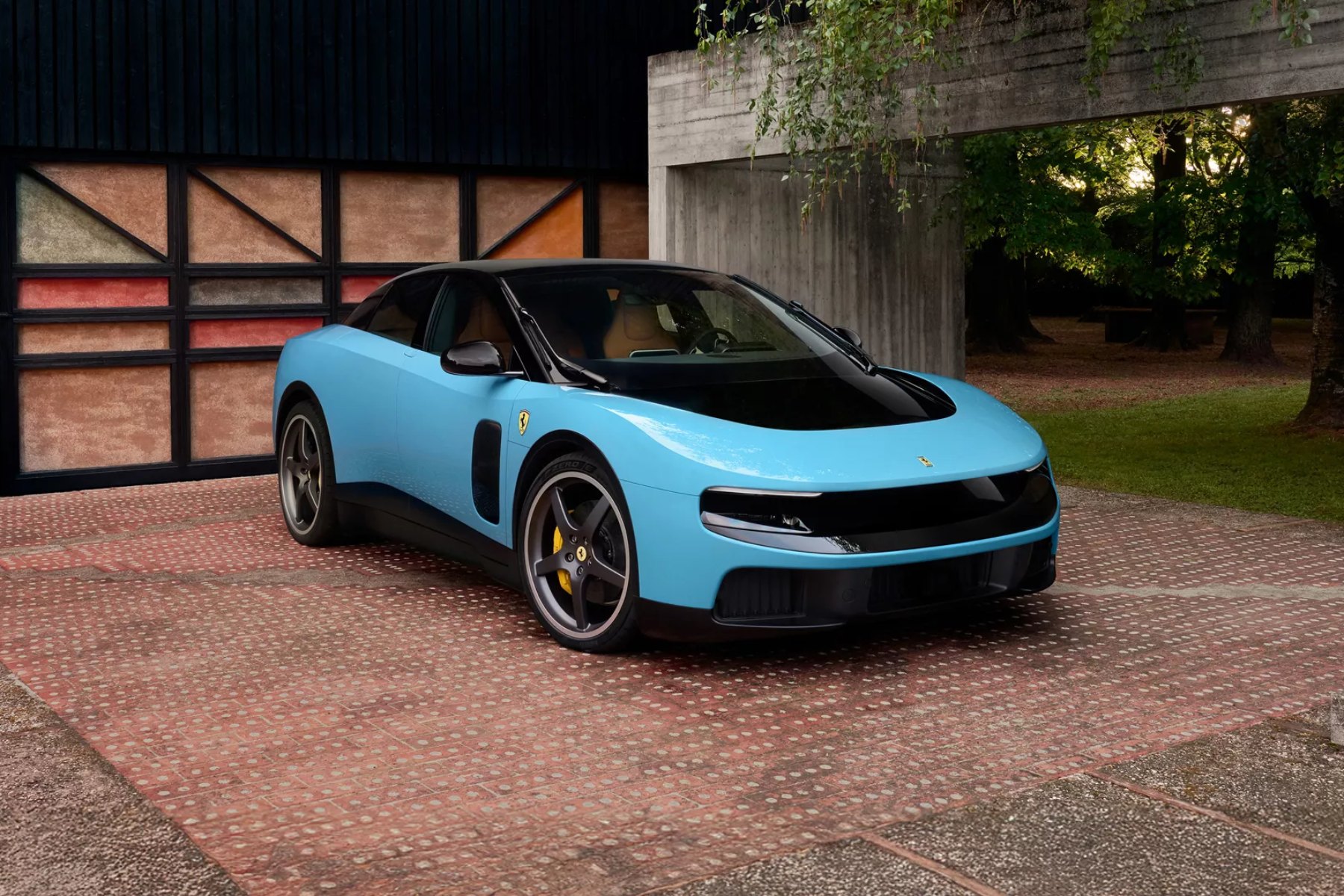
The Ferrari Luce price in the United States is $560,800 before options, a figure Ferrari confirmed in October, with US deliveries planned for the second quarter of 2027. For that you get Ferrari’s first electric car, its first five-seater and 1,035 hp from four electric motors.
It is also among the most expensive cars in Ferrari’s US range, and the most debated. Here is what the money actually buys, what it does not, and how it sits against the rest of the lineup.
The Ferrari Luce price, decoded
In Italy the Luce starts at €550,000 including VAT. Strip out Italy’s 22 percent VAT and the pre-tax figure is roughly €450,800, according to Electrek’s breakdown of the US pricing. Early estimates that simply converted the European sticker had the American car near $640,000, so $560,800 landed lower than most of the industry expected.
Part of the gap between the pre-tax European price and the American one is the 15 percent US tariff on European-built cars, which Electrek cites as a factor. Note what the number excludes: Ferrari has not published option pricing, and on a Ferrari the options sheet is rarely a footnote.
Against the rest of the US lineup, per Carscoops:
- Ferrari Luce: $560,800
- Ferrari 849 Testarossa: $565,685
- Ferrari 12Cilindri: $468,594
- Ferrari Purosangue: $438,610
So the electric four-door costs roughly $120,000 more than Ferrari’s V12 SUV and sits within a few thousand dollars of the new Testarossa. That is serious money for a car you can use every day, though it is a different proposition from a track-only collector piece like the McLaren Solus GT shown in Monaco.

What 1,035 hp and 122 kWh actually means
The Luce uses four electric motors, one at each wheel, for a combined 772 kW (1,035 hp) and just under 1,000 Nm of torque. Ferrari claims 0-100 km/h in 2.5 seconds, 0-200 km/h in 6.8 seconds and a 310 km/h (193 mph) top speed, figures reported by Chasing Cars.
The battery is a 122 kWh structural pack built into the floor, on an 800-volt architecture, with cells from SK On. Peak DC charging is 350 kW, and the WLTP range is 530 km, about 329 miles. An EPA rating had not been published when I checked, and US-cycle figures typically come in below WLTP.
Then the less flattering number: 2,260 kg (4,982 lb), which makes it the heaviest Ferrari yet. The engineering answer is in the details. Designboom’s report on the launch describes hollow aluminum castings and extrusions for the chassis, a patented Torque Shift Engagement system controlled from paddles on the wheel, and more than 60 new patents across the project.
Ferrari also refused to fake an engine note. A patented system uses an accelerometer to pick up the vibrations of the electric axles, then filters and amplifies them through cabin and exterior speakers. No synthesized V12, which I respect.
Five seats, a real trunk and 24-inch wheels
This is Ferrari’s first five-seater and its first liftback. With no transmission tunnel, the middle rear passenger gets usable legroom, and the cargo area holds 597 liters, the most of any Ferrari and more than the Purosangue’s 473 liters. The body is about five meters long and rides on the largest staggered wheels ever fitted to a series-production Ferrari: 23 inches front, 24 inches rear.
That combination changes who the car is for. A Luce can take four adults and their luggage from Boston to a weekend in Stowe or the Berkshires without the compromises of a two-plus-two. Ferrari is clearly courting buyers who might otherwise have a Lucid, a Taycan or a Range Rover in the garage alongside, or instead of, a V12.
The LoveFrom cabin: why design people care
The Luce is the first complete car from LoveFrom, the design collective led by Sir Jony Ive and Marc Newson. According to Ferrari’s launch release, as reproduced by the Ferrari Owners’ Club, the team was brought in from outside Ferrari’s Design Studio, led by Flavio Manzoni, and given creative freedom from the outset.
You see it most inside. Per Designboom:
- Cabin surfaces in 100 percent recycled anodized aluminum, Corning Gorilla Glass and Italian leather
- A steering wheel machined from recycled aluminum, with magnetic paddles and physical dials
- A binnacle with physical needles laid over digital dials, under a machined glass lens
- Ultra-slim free-form OLED screens developed with Samsung Display
- A Gorilla Glass key with an E Ink display; docking it in the tunnel washes the dashboard in historic Ferrari yellow
Outside, the shell-like “glass house” extends below the beltline, the doors are rear-hinged, and the halo tail lights nod to the 360 Modena and 458 Italia. Whether you love the shape or not, it is the most considered piece of industrial design Ferrari has produced in years, and it reads more like a Monocle cover than a supercar poster. If the design story behind modern EVs interests you, I looked at a very different approach in the design story behind the Tesla lineup.

Availability: sold out, for now
Ferrari revealed the Luce on May 25, 2026, at the Vela di Calatrava in Rome. Electrek reports that the 2026 allocation of just under 500 cars sold out in less than two months, with China a large share of demand, and that the first production chassis sold for $40 million at an August charity auction for the Ferrari Foundation.
For American buyers, the realistic path is a conversation with a dealer now about a 2027 build slot. As with any Ferrari launch, a purchase history with the brand tends to matter.
Should you buy one?
The case for the Luce is not lap times. A Lucid Air Sapphire offers more than 1,200 hp for roughly $250,000, as InsideEVs and Electrek both point out. The case is the object itself: a genuinely new idea of what a Ferrari can be, designed by people who changed how we think about the things in our pockets, with room for the family and the weekend bags.
If you want an EV that is quick and practical, there are rational choices at a third of the price. If you want 700-plus horsepower with a back seat and an engine note, my Aston Martin DBX 707 driving review covers a very different kind of luxury performance. If you want the first electric Ferrari, with a cabin you will still be studying five years from now, the Luce has no substitute. The one to order is the one with restraint on the options sheet: the design does the talking.
For context on how Ferrari ownership is usually experienced on the road, our piece on driving a Ferrari through Tuscany with Red Savannah is still a good place to dream. And for where the wider EV market has been heading, see EVs closing in on price parity with gas cars.

Ferrari Luce at a glance
- US price: $560,800 (options extra)
- US deliveries: Q2 2027
- Power: 772 kW / 1,035 hp, four motors
- 0-100 km/h: 2.5 seconds; top speed 310 km/h
- Battery: 122 kWh, 800V, 350 kW peak charging
- Range: 530 km (about 329 miles) WLTP
- Weight: 2,260 kg
- Seats / cargo: five / 597 liters
- Design: LoveFrom (Jony Ive, Marc Newson) with Ferrari Centro Stile
FAQ
How much is the Ferrari Luce in the US?
The Ferrari Luce starts at $560,800 in the United States before options, taxes and fees. Ferrari has not published option pricing.
When can I get a Ferrari Luce in America?
US deliveries are planned for the second quarter of 2027. The 2026 allocation of just under 500 cars sold out in under two months.
How much range does the Ferrari Luce have?
Ferrari quotes 530 km, about 329 miles, on the European WLTP cycle from its 122 kWh battery. An EPA figure had not been published at the time of writing.
Who designed the Ferrari Luce?
LoveFrom, the design collective of Jony Ive and Marc Newson, designed the exterior and interior in collaboration with Ferrari’s in-house design team led by Flavio Manzoni.
Leave a Reply