
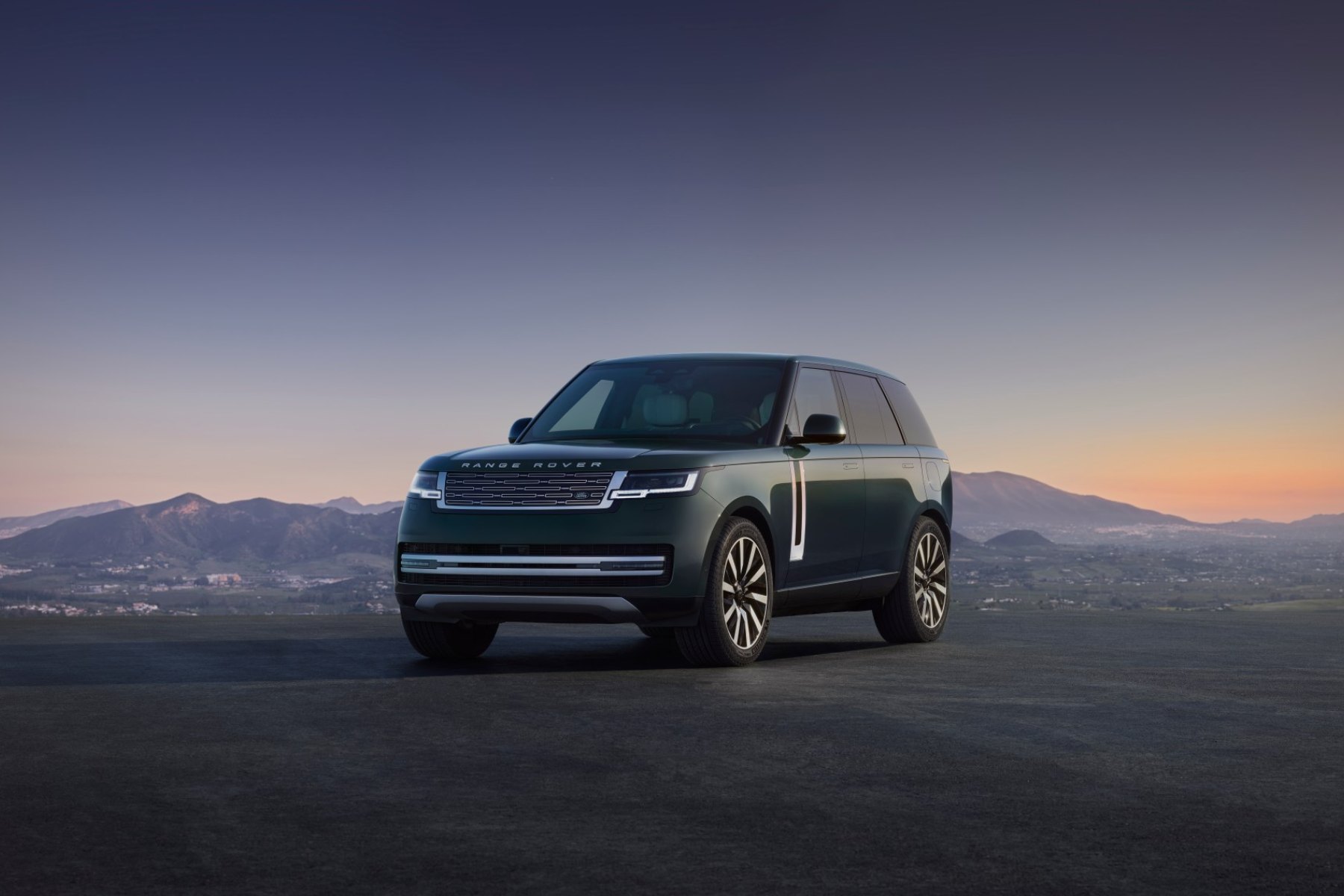
The Range Rover Electric price starts at $138,000 in the US, plus a $2,450 destination charge, which puts it at $140,450 delivered. That is the same money as the Range Rover P530 SE with the twin-turbo V8. JLR opened US orders on September 2, 2026, which leaves one of the more interesting choices in luxury right now: same badge, same price, two very different cars.
I have laid out the numbers side by side, then made the case for each. The short version: for most Northeast owners who charge at home, the electric one is the better Range Rover. The V8 still wins on towing and on long rural drives.
Range Rover Electric price vs the V8
Here is how the two compare on the figures that matter, from JLR’s US launch information (via Electrek and GM Authority) and Kelley Blue Book for the V8:
- Price (SE, before destination): Electric $138,000; P530 V8 $138,000 ($140,450 for each with destination)
- Power: Electric 542 hp and 627 lb-ft; V8 523 hp
- 0-60 mph: Electric 4.3 seconds; V8 4.4 seconds
- Range / economy: Electric up to 333 miles (JLR’s EPA-cycle estimate); V8 19 mpg combined
- Wading depth: Electric 900 mm (35 inches), on par with the combustion models
If you climb the range, the electric is offered across the Autobiography, SV, SV Black and SV Ultra trims as well as a First Edition in long wheelbase. Electrek lists the LWB First Edition from $183,850 delivered, with a front console fridge, the Tailgate Event Suite and illuminated First Edition treadplates.

What’s under the floor
The electric Range Rover uses two motors, one per axle, each rated at 260 kW, and a 118.5 kWh usable battery built from 344 prismatic cells in a double-stack pack. It runs on an 800-volt architecture and charges at up to 350 kW: 10 to 80 percent in about 22 minutes, or about 125 miles added in ten minutes under ideal conditions.
For American owners the detail that matters more is the built-in NACS port, which gives access to Tesla Superchargers without an adapter. Electrive notes that on a Tesla V4 Supercharger the 10-80 percent stop takes around 32 minutes, and around 40 on a V3, so the 22-minute figure depends on finding a 350 kW unit.
On the road, JLR says its traction system adjusts motor speed within 50 milliseconds, and there is a single-pedal mode. The off-road credentials are intact: Automotive World reports a 45-degree climbing capability alongside the 900 mm wading depth. Braked towing is 2,500 kg (5,511 lb), per Electrive.
The car is built at Solihull on the same lines as the combustion and plug-in hybrid Range Rovers, with battery packs and drive units from JLR’s Wolverhampton facility, according to Automotive World. JLR’s CEO said production would begin in September, as reported by Autocar Professional.
The case for the Range Rover Electric
It is the better daily car. The electric matches the V8 off the line and should be the quieter, smoother of the two, which is the whole point of a Range Rover. JLR describes it as the quietest and most responsive Range Rover yet.
Home charging makes the economics easy. If you have a garage in Weston, Wellesley or on the Cape, you wake up to a full battery. Pair it with a properly installed Level 2 unit (a 48-amp NACS-compatible home charger is the type to look at, and have an electrician spec the circuit) and the gas station disappears from your week.
The range is real-world usable. Up to 333 miles covers Boston to Stowe or Sugarbush with charge to spare, and with Tesla Supercharger access the ski commute gets far simpler. I wrote about EV road-tripping in New England years ago in our Tesla trip to Newburyport, and the network has only grown since.
Same price, newer technology. When an EV costs the same as the V8, the usual argument about paying a premium for electric no longer applies.

The case for the V8
Towing. At 5,511 lb braked, the electric is fine for a pair of jet skis but not the boat many Cape and Lakes Region owners pull. If you tow seriously, check the combustion models’ ratings for the specific trim before you sign.
Remote drives. If your routine includes long runs to northern Maine or into Quebec, where fast chargers thin out, a V8 and a gas tank remain simpler. The same applies to a ski-season run up to Mont-Tremblant in deep cold, when any EV’s range shrinks.
Seven seats. According to The Weekly Driver’s reading of JLR’s US configurator, the seven-seat SE and Autobiography are listed with gasoline engines only. If you need a third row, the electric is not the one.
Sound. There is still something about a twin-turbo V8 at idle in a parking garage. I wrote about exactly that in my Aston Martin DBX 707 driving review, and it is a real, if irrational, reason to buy.
Delivery timing
JLR opened US orders on September 2, 2026. I could not find a confirmed US delivery date from JLR at the time of writing, so ask your retailer for a firm build slot when you place an order. Automotive World reports that more than 80,000 people have expressed interest, which suggests early allocations will go quickly.
My pick
For a Boston-area family with a garage and no boat, the Range Rover Electric SE is the one to order. It is quicker, should be quieter and costs nothing extra. If you tow, need a third row, or drive far beyond the fast-charging map every month, the P530 remains the right Range Rover. If you are weighing it against other electric SUVs, our coverage of Rivian’s Boston showroom is a useful starting point for the R1S, and our look at EV price parity explains why moments like this were coming.

FAQ
How much is the electric Range Rover?
The Range Rover Electric SE starts at $138,000 before a $2,450 destination charge, or $140,450 delivered. The long-wheelbase First Edition starts at $183,850 delivered.
What is the range of the Range Rover Electric?
JLR estimates up to 333 miles on the US EPA cycle and up to 372 miles on the European WLTP cycle, from a 118.5 kWh usable battery.
Can the Range Rover Electric use Tesla Superchargers?
Yes. North American models have a built-in NACS port and access to Tesla Superchargers without an adapter.
Is the Range Rover Electric faster than the V8?
On paper, slightly. JLR quotes 0-60 mph in 4.3 seconds with 542 hp, against 4.4 seconds and 523 hp for the P530 V8 SE.
Leave a Reply