
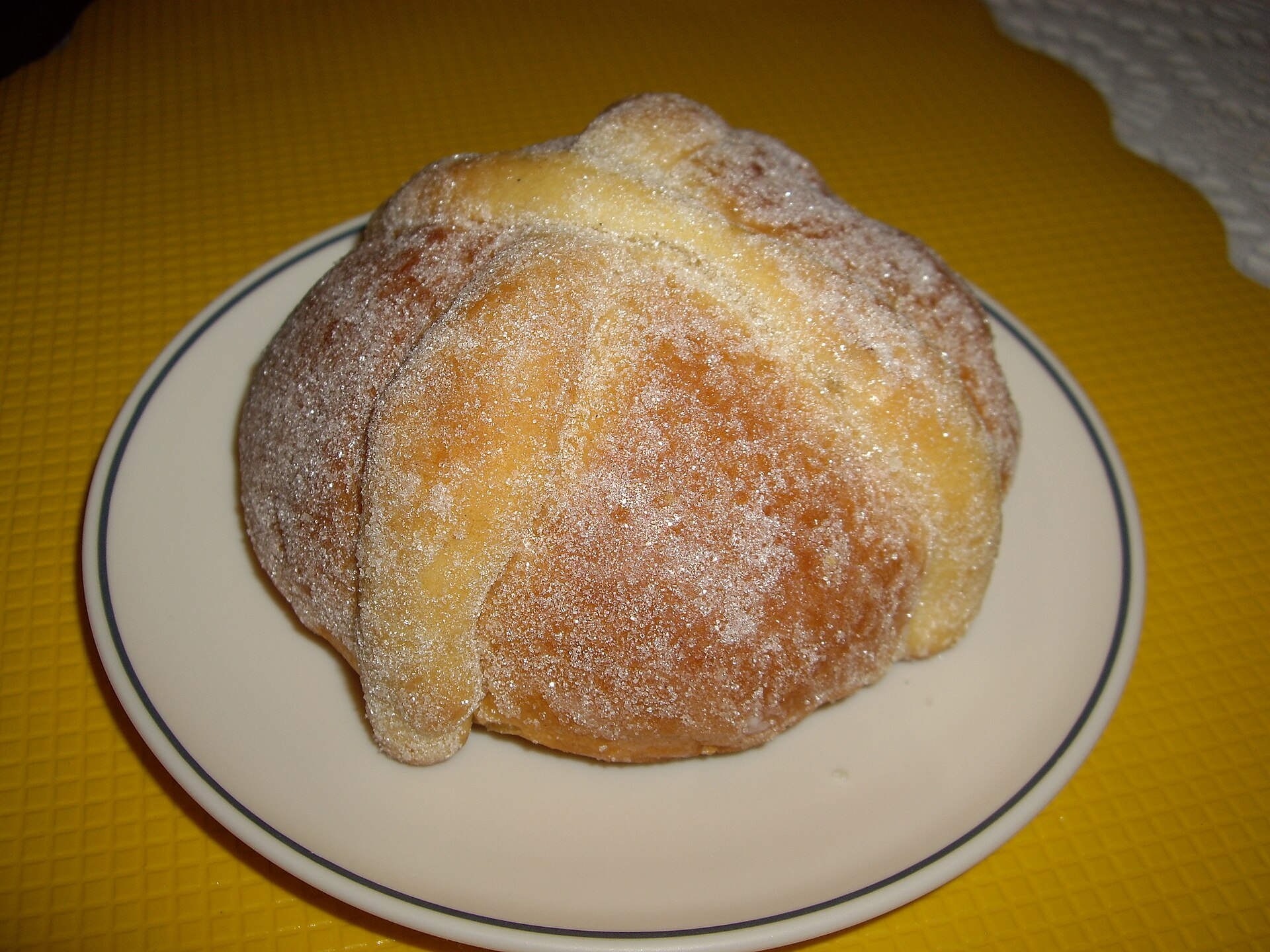
In the weeks before November 1, bakeries across Mexico fill with pan de muerto, the bread of the dead. It is a soft, enriched round loaf scented with orange zest and orange-blossom water, decorated with strips of dough shaped like bones arranged in a cross, and a small ball on top that is often said to represent a skull or a tear.
Pan de muerto is placed on the ofrenda as an offering to the souls who return during Día de Muertos, and it is shared at the table with family. The celebration, with its blend of Indigenous and Catholic traditions, is recognized by UNESCO as part of the world’s intangible cultural heritage.
Where to experience it
In Mexico City, the bakeries of the historic center sell pan de muerto from early October, and the city’s Day of the Dead parade draws huge crowds. Our piece on the St. Regis Mexico City is a good base. In Oaxaca, the loaves are often a richer egg bread decorated with small painted faces.
Orange blossom matters
Orange-blossom water, sold in Middle Eastern and Latin American groceries, gives the bread its unmistakable scent. Use it with a light hand, along with plenty of fresh orange zest.
Ingredients
Makes 2 medium loaves.
For the dough
- 1/2 cup (120 ml) whole milk, warm
- 2 1/4 tsp (1 packet) instant yeast
- 1/2 cup (100 g) sugar
- 4 cups (500 g) all-purpose flour
- 1 tsp fine salt
- 4 large eggs, at room temperature
- 1/2 cup (115 g) unsalted butter, softened
- Zest of 2 oranges
- 1 tbsp orange-blossom water
To finish
- 1 egg, beaten
- 4 tbsp (55 g) unsalted butter, melted
- 1/2 cup (100 g) sugar
Method
- Make the dough. Mix the milk, yeast and a spoonful of the sugar. In a stand mixer, combine the flour, remaining sugar and salt, then add the yeast mixture, eggs, zest and orange-blossom water. Knead with the dough hook for 5 minutes.
- Add the butter. Add the butter a little at a time and knead for 8 to 10 minutes more, until the dough is smooth, shiny and elastic.
- First rise. Cover and let rise in a warm place until doubled, 1 1/2 to 2 hours.
- Shape. Set aside about a fifth of the dough. Divide the rest in two and shape into smooth domes on a lined baking sheet. Roll the reserved dough into ropes, pressing at intervals to make knobbly “bones,” and lay them over the loaves in a cross. Top each with a small ball of dough.
- Second rise and bake. Let rise for 45 minutes. Heat the oven to 350°F, brush with beaten egg and bake for 30 to 35 minutes until deep golden.
- Sugar. While still warm, brush with melted butter and sprinkle generously with sugar.
How to serve it
The same day, torn into pieces, with hot chocolate or champurrado, the masa-thickened chocolate drink coming tomorrow.
What to pour
Mexican hot chocolate or café de olla.
Make a menu of it
Make it with yesterday’s calabaza en tacha for a Día de Muertos table. More seasonal baking, from barmbrack to apple strudel, is At the Table.
Photo: Fluence, Wikimedia Commons, public domain

Leave a Reply