
The JQ List may earn a commission when you buy through links in this article.
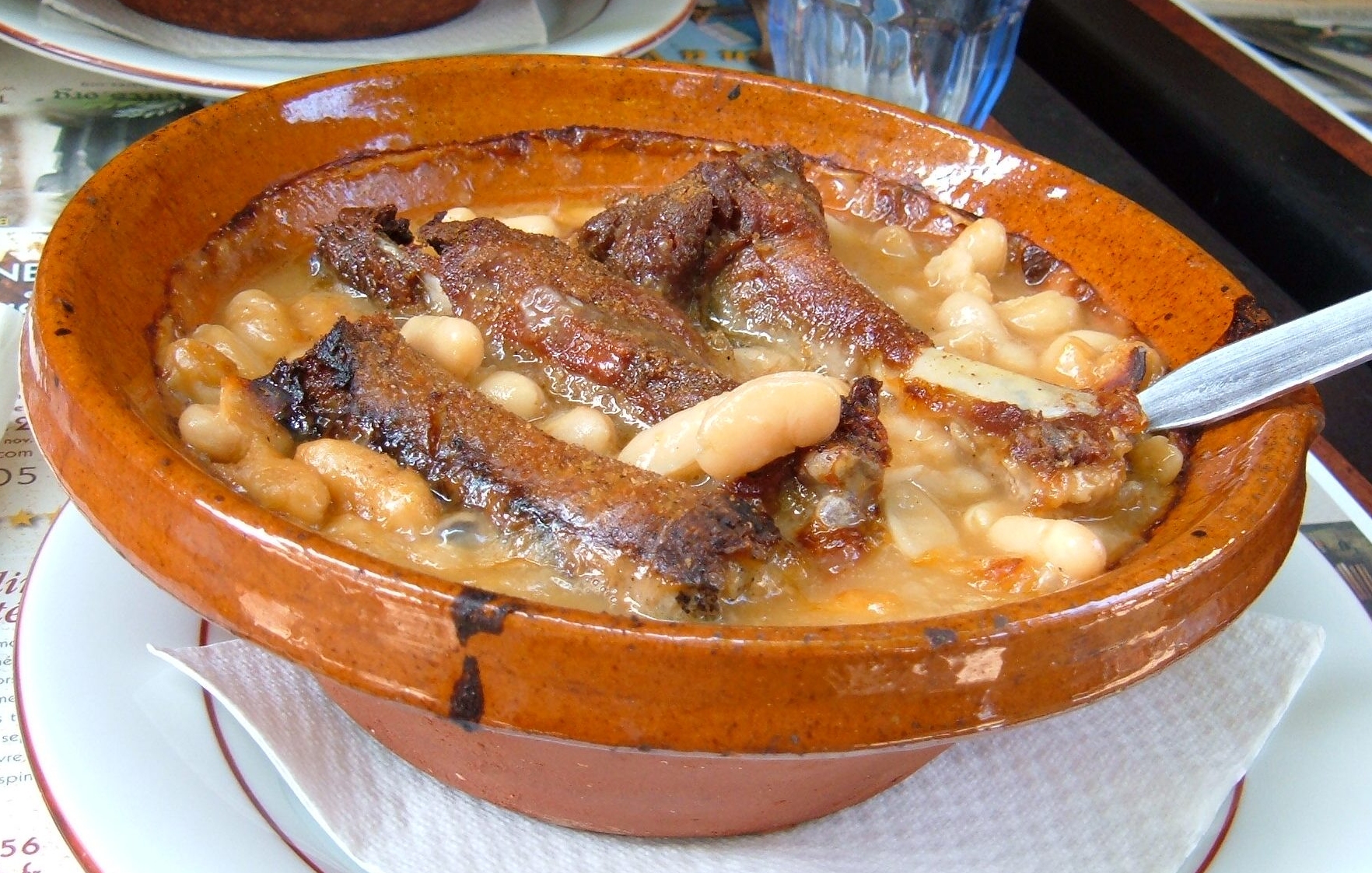
Three towns in southwest France claim cassoulet, and each will tell you the others get it wrong. Castelnaudary calls itself the world capital of the dish; Carcassonne, beneath its medieval walls, adds partridge or mutton; Toulouse insists on its famous garlicky sausage. What they share is the slow marriage of white beans, pork and duck confit, baked for hours in a wide earthenware dish called a cassole, from which the dish takes its name.
Local legend traces cassoulet to a siege during the Hundred Years’ War, when the people of Castelnaudary pooled what they had into one great pot. Whatever its origin, it is the Languedoc’s Sunday lunch, a dish made for a long table and a cold afternoon.
Eat it in the Languedoc
Pair a visit to Carcassonne’s walled Cité with lunch in Castelnaudary, an hour away along the Canal du Midi. If you are coming from Provence, our stay at La Mirande in Avignon makes a graceful start to a southern road trip.
A cassoulet you can make at home
Traditional cassoulet takes three days. This version keeps the essentials, good beans, duck confit, pork and sausage, and finishes in a single afternoon. Ready-made duck confit legs, sold in good butchers and online, make it practical. The crust is the soul of the dish: break it and push it under several times as it bakes.
Ingredients
Serves 8.
- 1 lb (450 g) dried white beans such as Tarbais, cannellini or Great Northern, soaked overnight
- 8 oz (225 g) pork belly or slab bacon, in one piece
- 1 onion studded with 2 cloves, 1 carrot and 1 head garlic, halved
- 1 bouquet garni of thyme, bay and parsley
- 4 duck confit legs
- 1 lb (450 g) Toulouse or other coarse garlic pork sausage
- 1 lb (450 g) boneless pork shoulder, in 2-inch pieces
- 2 tbsp tomato paste
- 1 cup (60 g) fresh breadcrumbs
- Salt and black pepper
Method
- Cook the beans. Drain the beans and put them in a large pot with the pork belly, onion, carrot, garlic and bouquet garni. Cover with water by 2 inches and simmer for about 1 hour, until just tender. Season with salt near the end.
- Brown the meats. Scrape the fat from the confit and use it to brown the sausages and pork shoulder in a skillet. Cut the sausages into chunks. Pull the confit into large pieces, discarding the skin and bones.
- Assemble. Heat the oven to 300°F. Lift out the pork belly, slice it, and discard the vegetables and herbs. Stir the tomato paste into the beans. In a deep earthenware or enameled dish, layer beans, meats, then more beans, finishing with beans. Add bean liquid to just cover.
- Bake and break the crust. Scatter with breadcrumbs and drizzle with duck fat. Bake for 2 1/2 to 3 hours. Each time a golden crust forms, break it with a spoon and push it under, adding a little bean liquid if it looks dry. Do this at least three times.
- Finish. Leave the final crust intact and deep golden. Rest for 15 minutes before serving.
How to serve it
Straight from the dish at the table, with a sharp green salad and nothing else. Cassoulet reheats beautifully, and many cooks prefer it on the second day.
What to pour
The wines of the southwest: a Minervois, Corbières or Cahors, or a Madiran from farther west for something firmer.
Make a menu of it
For a French winter weekend, serve cassoulet on Saturday and our boeuf bourguignon on Sunday, with a tarte tatin to finish. More recipes from France are At the Table.
Photo: BrokenSphere, Wikimedia Commons, CC BY-SA 3.0

Leave a Reply